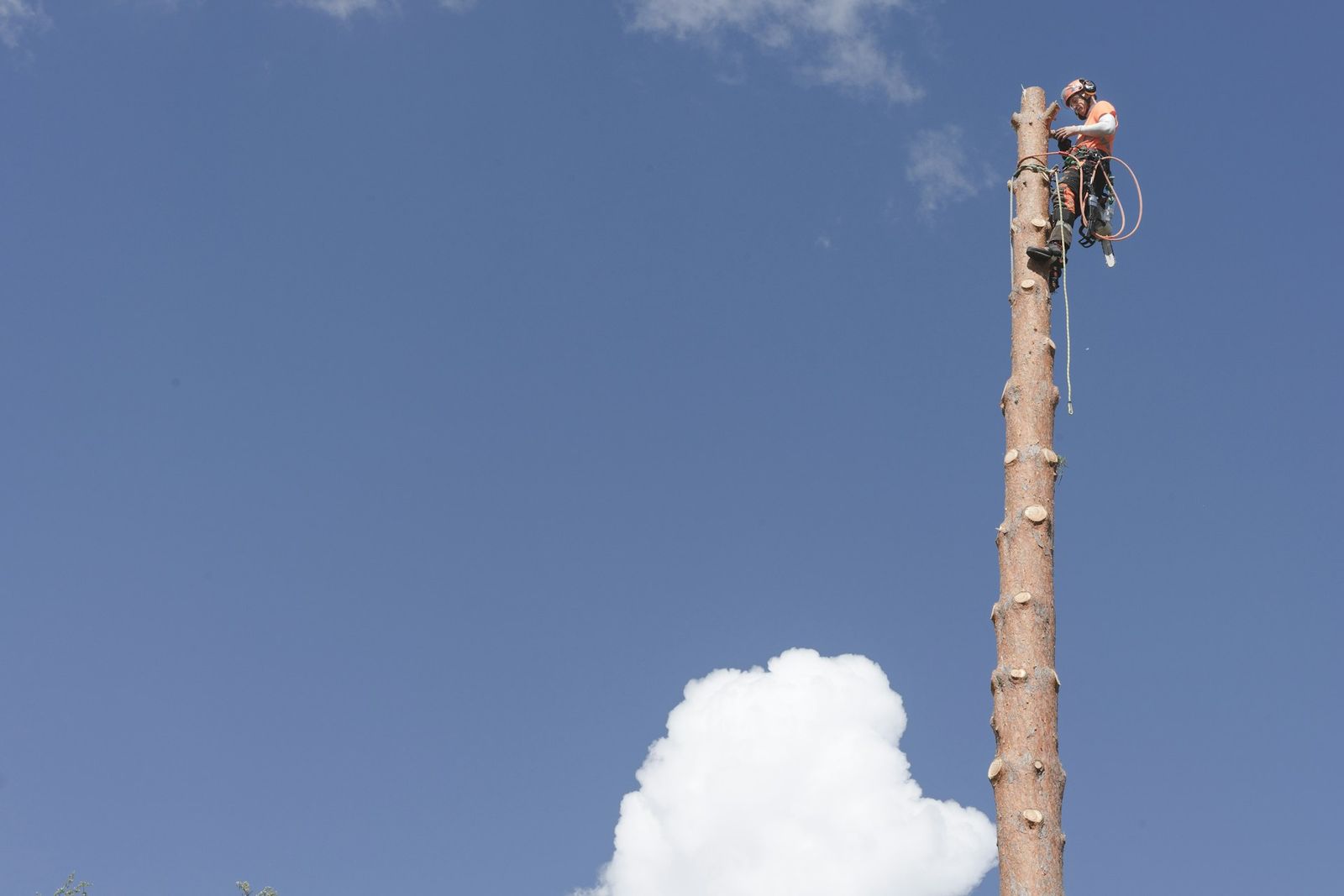
If you have an oak over the roof, book the pruning for winter, not May. Hurricane season runs June 1 to November 30, and the weather service's 2026 South Texas Hurricane Guide puts this under home preparation: "Trim trees, shrubbery and dead limbs, especially ones close to your home." The Forest Service's oak advice is what pushes the date earlier than most people think.
Work around the oak calendar
Because of oak wilt, Texas A&M Forest Service wants oaks left uncut and unwounded from February through June, pruning included. It names "the coldest days in midwinter and extended hot periods in mid to late summer" as the least hazardous times. Lay that over the storm dates and oak work left for spring runs straight into June 1 with the no-cut months in the way. So plan oak pruning for the cold days of winter. Other trees can be done any time before the season.
The brochure also says to paint every cut and fresh stump on an oak with wound or latex paint right away, in any month. The Forest Service allows spring cuts only for immediate safety concerns, and a limb hanging over your bedroom counts as one.
We could not confirm whether oak wilt has been found in Nueces County. The brochure's small state map shades counties with confirmed cases. We could not see Nueces shaded, and we found no Forest Service county sheet for it. That is not proof the disease is absent, so ask the county extension office in Robstown at (361) 767-5223 (their number, not ours). The precautions are cheap either way.
What to ask for
- Dead and defective branches out, and a look for branch, trunk and root defects. That is the International Society of Arboriculture's list of preventive care, along with correcting old topping.
- Proper pruning on big trees. University of Florida extension says "Correct pruning is the most important part of helping trees survive hurricanes", and that thinning a large canopy should work on the outer edges, not the interior. It is Florida advice, from a state that knows hurricanes.
- No hat-racking. The trim or remove page explains why.
- Palms left mostly alone. Florida extension warns against the so-called "hurricane cut", because it "removes green fronds that the palm needs to produce nutrients", and says generally only dead fronds should go.
Plan where the trimmings go. Your section's brush dates may not line up with the work, so have the crew haul them or take them in yourself. Do not leave a pile out with a storm in the Gulf. The same Florida article warns that tree debris on the ground can be picked up and carried by strong winds, and the weather service guide says loose items outside become flying missiles.
Trees that do well on this coast
If a tree comes out and you are replacing it, we did not find a Nueces County list. The closest we found comes from the Aransas/San Patricio Master Gardeners, posted by the San Patricio Municipal Water District across the bay. These are picks they "have found from experience to be well adapted to coastal South Texas". A few from their list, in their words:
| Tree | Their note |
|---|---|
| Live oak | "spreading evergreen, low water, salt tolerant" |
| Mesquite | "spiny deciduous, very salt tolerant native" |
| Texas ebony | "evergreen, salt tolerant" |
| Sugarberry hackberry | "deciduous, salt tolerant" |
| Anacua | "large evergreen; fast growing" |
| Cedar elm | "deciduous, fall blooms" |
| Yaupon holly (small) | "evergreen, red berries fall, native, salt tolerant" |
| Wild olive (small) | "evergreen, hardy, blooms spring-fall" |
That list says nothing about wind. Florida research does. A UF/IFAS extension summary names live oak among the most wind-resistant trees and sabal palm among the other good ones, with laurel oak and water oak among the least. It also says no tree is fully wind-proof, that more room for roots means better anchoring, and that trees in groups stand up better than single ones. Florida soil is not Coastal Bend soil, so treat that as a guide. A strong rating also does not mean no damage: the Forest Service found live oak crowns badly hit after Harvey.
Before you plant
Keep big trees away from wires and walls. Texas811 says homeowners must contact it two business days before digging, even in their own back yard, and names planting a tree as an example. The Stage 1 FAQ says exemptions for new plantings run up to 60 days and that applications are due within five days of a stage starting, so ask Corpus Christi Water before you plant anything that needs regular water.
Paperwork while the sky is clear
The hurricane guide warns that "New and existing policies will not be written or modified when a storm nears the Gulf of America", and suggests a photo inventory kept with your policy. Add a few pictures of the big trees and the roof while you are at it. Then read the windstorm insurance page and find out who covers wind on your house.
Phone line opening soon
Allow us to connect you to a local pro.
Sources
- City of Corpus Christi, Be Ready (hurricane preparedness and city phone numbers)
- National Weather Service Corpus Christi, 2026 South Texas Hurricane Guide (PDF)
- Texas A&M Forest Service, How to Identify and Manage Oak Wilt in Texas (PDF, 2024 revision)
- Texas A&M Forest Service, Prevent the spread of oak wilt in Texas this spring (March 10, 2021)
- Texas A&M AgriLife Extension, Nueces County office
- International Society of Arboriculture, Storm-Related Tree Damage (PDF, 2021)
- University of Florida IFAS, Preparing Trees for Hurricanes (Florida)
- UF/IFAS Extension St. Lucie County, Preparing Your Landscape for a Hurricane (Florida; September 3, 2026)
- San Patricio Municipal Water District, Selecting Water-Wise Plants for the Texas Coastal Bend (list by the Aransas/San Patricio Master Gardeners)
- UF/IFAS Extension Polk County, Hurricane Recovery: Wind-Resistant Trees (Florida; updated May 11, 2026)
- Texas A&M Forest Service, news release on Urban Forest Strike Teams after Hurricane Harvey (October 3, 2017)
- Texas811, I Want to Dig
- City of Corpus Christi, Stage 1 Water Restrictions FAQs
Read on 2026-11-05. External pages can change.